
Find Differences: Spot it!
Greyfun GamesTrivia
4.962.00 Reviews
- Version
- 1.0.13
- Installs
- 100.00K
- Age Rating
- Everyone
Screenshots
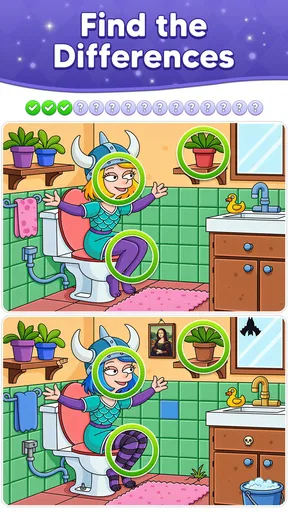
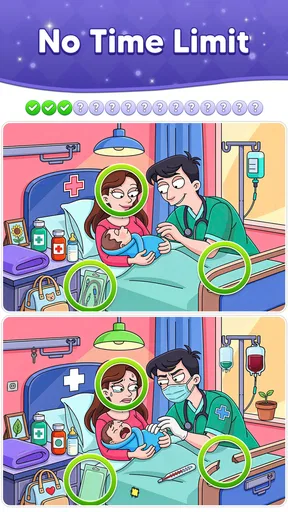
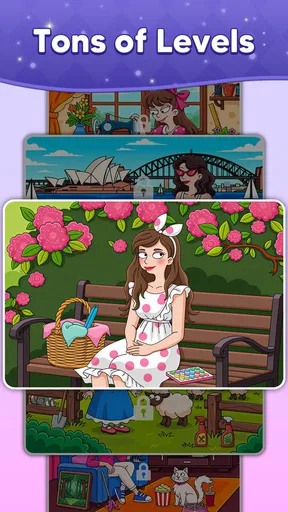
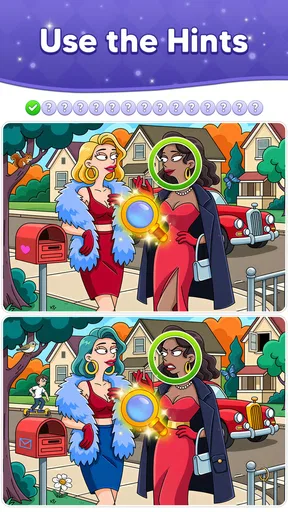
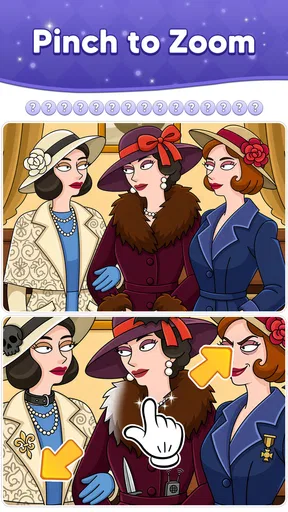
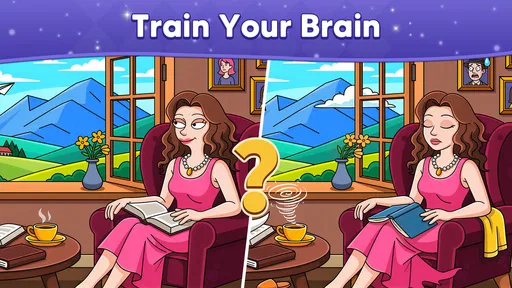
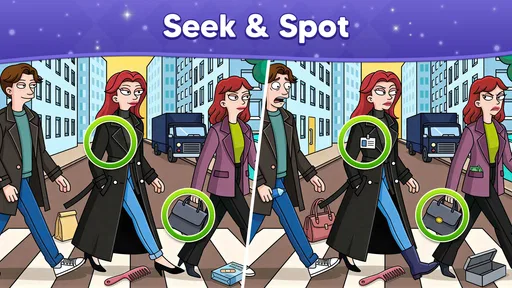
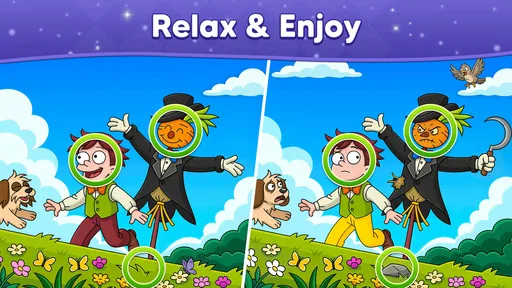
Our Review of Find Differences: Spot it!
 Analysis by Appyee
I enjoy trivia games that ask for attention rather than speed, and Find Differences: Spot it! takes that idea in a very direct direction. The game presents cartoon pictures and puzzles, then asks me to compare them carefully until I notice what has changed. It is easy to understand within seconds, but that does not make every puzzle easy. The pleasure comes from slowing down, scanning the image, and getting that small moment of satisfaction when a hidden detail finally becomes obvious.
That simple format makes it a useful choice for short breaks, quiet evenings, or a relaxed activity with a child. It is a free trivia game from Greyfun Games, rated for Everyone, and its audience is broad rather than specialized. I would not choose it for a dramatic story, competitive multiplayer experience, or a deep progression system. I would choose it when I want a visual observation challenge that I can start without learning complicated rules.
How to decide if this picture puzzle suits you
The first question is what kind of mental activity you want. Find Differences: Spot it! is built around visual comparison, so the main skill is not recalling facts or answering general-knowledge questions. I have to inspect colors, shapes, objects, outlines, and small details in two related images. That makes it closer to a concentration exercise than to a traditional quiz, even though it sits comfortably in the trivia category.
That distinction matters when comparing it with the usual alternatives. A conventional trivia game rewards memory and broad knowledge. A word puzzle rewards vocabulary and pattern recognition. A match-three game usually emphasizes quick reactions and repeated combinations. This title instead rewards patience. If I am tired and do not want to feel tested on information I may not know, visual difference puzzles are more welcoming because the answer is somewhere on the screen.
The store summary points to a very large collection of cartoon pictures and puzzles, with more than ten thousand described as available. I see that scale as useful mainly for variety. It suggests the game is intended for repeated sessions rather than a single sitting, although a large library does not automatically mean every puzzle will feel equally fresh. For me, the important test is whether the artwork remains readable and whether the differences feel fairly placed.
The game is free, which removes the biggest barrier to trying it. I can install it without committing money first and decide from actual play whether the visual style and difficulty work for me. The current release is version 1.0.8, and it runs on operating systems from version 7.1 onward. That makes it accessible to people using older compatible devices, although the experience will still depend on screen size and general device responsiveness.
Its audience numbers also suggest that it has reached a meaningful group of players: the listing shows over fifty thousand installs, with an average rating of 4.6 from more than a hundred ratings and nineteen written reviews. I treat that as encouraging rather than conclusive. A rating can tell me that many players enjoyed the basic idea, but it cannot replace my own judgment about image clarity, repetition, or whether the challenge feels fair.
The first session: simple rules, demanding attention
What I like about this format is the low learning curve. There is no complicated tutorial to memorize before I can begin comparing pictures. I can look at the pair, move my eyes across the scene, and start forming a search pattern. That immediacy is especially helpful when I only have a few minutes. I do not need to remember a storyline or rebuild a strategy from a previous session.
My preferred method is to divide each image into zones. I begin at the upper left, move across in a slow horizontal line, then repeat lower down. After that, I compare the larger shapes and colors before checking tiny objects. This is more reliable than jumping randomly around the screen, because random tapping makes it easy to overlook a difference that sits in an area I already glanced at.
A second useful habit is to compare negative space rather than only the objects themselves. In cartoon artwork, a missing line or altered gap can be harder to notice than a changed item. I also look for mismatched symmetry, such as one side of a character or background object being slightly different. These techniques are not presented as a separate lesson, but they make the game more enjoyable because they turn each puzzle into a small visual investigation.
The real challenge is controlled observation, not fast tapping. That makes the game suitable for players who like to examine an illustration carefully. It also means that someone expecting constant action may find the pace too quiet. The appeal depends on whether you enjoy the search itself, not merely the reward of finishing.
Why the cartoon presentation matters
The cartoon focus gives the puzzles a lighter mood than photographic spot-the-difference games. I find illustrated scenes easier to approach casually, especially when I am playing with a younger family member. A colorful drawing can invite conversation: we may first describe what we see, then compare the two versions. Because the content rating is Everyone, the overall positioning is clearly intended to be broadly approachable.
That does not mean every player will prefer the artwork. Some people want realistic scenes with subtle lighting changes, while others prefer minimalist images where every shape is clean and isolated. Cartoon pictures can contain many competing details, and that can make a difference either satisfyingly hidden or frustratingly obscure. My response depends on the balance of the individual puzzle. A well-designed busy scene rewards patience; a cluttered one can make me question whether I missed something or whether the change is simply too small.
For children, I would use it as a shared activity rather than automatically handing over a device and walking away. The visual format is accessible, but an adult can help turn the search into a calm observation game instead of a tapping contest. Asking a child to explain where the difference is can also make the session more thoughtful. For adults, the same approach works as a short break from reading, scrolling, or repetitive work.
Where this game wins over familiar alternatives
Its strongest advantage is accessibility. A general trivia quiz can exclude me when I do not know a particular fact, while a word game can become difficult because of vocabulary or language. Here, the information needed to solve the puzzle is visible. I may still struggle, but the problem is attention rather than missing background knowledge. That makes it a good choice for mixed-age play and for people who want a challenge without a knowledge gap.
It also wins when I want flexible session length. I can complete a puzzle during a short wait, or continue searching through several scenes when I have more time. There is no need to prepare mentally for a long campaign. This makes it more convenient than games that require a sustained story session or a carefully planned strategy.
Another strength is the potential variety created by a large picture library. Even without adding complex mechanics, many different scenes can keep the central activity from becoming immediately repetitive. The value here is not depth in the traditional gaming sense. It is the steady supply of small visual problems. If I enjoy the basic loop, the breadth of the collection is more useful than a complicated reward structure would be.
I also appreciate that the game can be played cooperatively in an informal way, even if the core task is individual. Two people can inspect the same image and point out possible changes. That makes it different from a typical trivia app where one person answers and another checks the result. The shared search feels less intimidating because both players are looking at the same evidence.
Where another type of game may fit better
I would not recommend this title to someone who needs strong competition, social interaction, or a constant sense of advancement. A quiz with live opponents is a better fit for players who enjoy pressure and comparing scores. A word game may be preferable for anyone who wants to build vocabulary or solve layered clues. A fast arcade title will offer more immediate movement and reaction-based excitement.
It may also be the wrong choice if visual strain is a concern. Spotting small changes requires sustained focus, and dense cartoon scenes can become tiring after several puzzles. I would take regular breaks rather than treating the game as an endless concentration test. A larger screen may make close inspection more comfortable than a small phone display, particularly when the difference is subtle.
Another trade-off is that the core idea remains intentionally narrow. The game does not need elaborate systems to work, but players who quickly tire of comparing images may feel that the variety is cosmetic rather than mechanical. New artwork can refresh the search, yet the fundamental action stays the same. I see that as a strength for fans of the format and a limitation for people who need changing gameplay rules.
There is also a difference between relaxing difficulty and effortless play. Because the game relies on noticing details, I can become more absorbed than expected. That is enjoyable when I want focused quiet, but less suitable when I need something I can play while distracted. If I am watching a show or frequently interrupted, I may miss details and blame the game for a problem caused by divided attention.
Practical ways to get more from each puzzle
I recommend beginning with a full-image scan before tapping anything. First, I compare the overall composition: the number of visible characters, the main colors, and the location of large objects. Then I work through smaller regions. This two-pass method helps me avoid spending too long on tiny details while overlooking an obvious change in the background.
When I get stuck, I deliberately change the order of comparison. Instead of looking from left to right again, I focus on repeated elements such as windows, flowers, facial features, signs, or patterns. Cartoon scenes often reuse visual motifs, and comparing matching motifs can reveal an inconsistency more quickly than staring at the whole image.
I also avoid rapid tapping. Careless taps can interrupt my visual rhythm and make it harder to remember which areas I already checked. A better workflow is to pause, identify a suspected location, and compare the surrounding shapes before selecting it. This is a small adjustment, but it turns the game from guessing into a repeatable process.
For a child or another new player, I would suggest dividing the picture verbally: “Let us check the sky, then the characters, then the ground.” That approach makes the activity less overwhelming and teaches a transferable observation habit. It is one of the reasons I see this game as more useful in a shared setting than its simple premise might suggest.
If I am using it as a break during work, I set a natural stopping point after a puzzle rather than continuing automatically. The game is easy to reopen, so there is little benefit in forcing a long session when my concentration is fading. The best use is often a short reset: focus on one scene, finish the search, then return to the task that needed my attention.
What the free model means for the decision
Because the game is free, trying it is straightforward. I do not have to decide whether a paid purchase is justified before discovering whether I enjoy the artwork. That is particularly helpful for families, casual players, and anyone who has never tried a difference-finding game.
Still, “free” should not be confused with a guaranteed perfect fit. The real cost can be attention, storage, or interruptions, depending on how the game behaves during use. I would judge it by the comfort of the play session rather than by the price alone. If the puzzles hold my focus and the presentation feels pleasant, the free entry point is a clear advantage. If I find the central loop repetitive, no price makes it the right long-term game.
The developer, Greyfun Games, has positioned this release around a focused visual puzzle experience rather than a broad collection of unrelated mini-games. That clarity helps me decide quickly. I know what kind of activity I am installing: cartoon-based difference finding, not a general trivia hub. The current version gives me a concrete starting point, while the large stated picture collection provides a reason to return if the basic loop works for me.
Who should install it, and who should skip it
I would recommend it to casual puzzle players, families looking for a simple shared activity, and adults who enjoy quiet visual challenges. It is also a sensible option for someone who dislikes knowledge-based trivia but still wants a game that exercises attention. The Everyone rating and straightforward rules make it approachable, while the broad image collection gives committed fans room to keep searching.
I would be more cautious about recommending it to players who need story, strategy, online competition, or constant mechanical variety. They may have a better time with a different trivia format, a word-based puzzle, or an action game. I would also skip it when I am looking for something to play entirely passively. The game asks me to look closely, and that demand is central rather than optional.
For someone deciding between this and a standard quiz, my advice is simple: choose this one if you want answers hidden in pictures instead of stored in memory. Choose the quiz if you enjoy recalling facts and measuring your knowledge. For someone choosing between this and a fast arcade game, I would ask whether the goal is calm concentration or instant stimulation. The answer makes the decision clearer than the genre label alone.
My recommendation after weighing the trade-offs
Find Differences: Spot it! is a focused, approachable trivia game that succeeds because it does not overcomplicate its central idea. I enjoy the directness: open a cartoon scene, compare it carefully, and search until the altered details reveal themselves. The free price, Everyone rating, broad compatibility from operating system 7.1 onward, and substantial picture library make it easy to try.
My recommendation is positive for the right audience, with one important condition: you should genuinely like visual searching. The game cannot hide the fact that its main activity is repeated comparison. If that sounds satisfying, the variety of cartoon puzzles can provide many convenient short sessions. If it sounds monotonous, a different category will serve you better, no matter how many images are available.
I would install it when I want a calm attention game, not when I want a competitive trivia battle. That is the clearest way to understand its value. It is approachable enough for casual use, focused enough to reward careful observation, and simple enough to share with another person. Its limitations are the natural cost of that simplicity, but for players who enjoy spotting small changes, Find Differences: Spot it! offers an easy and worthwhile place to start.
Privacy and Permissions
See what permissions an app requests and how it handles your data.
- Wi-Fi connection information
- view Wi-Fi connections
- Other
- view network connections, full network access, control vibration, prevent device from sleeping, Google Play license check
Verdict
Strengths of Find Differences: Spot it!
- Simple controls make it easy for all ages to start playing.
- Short levels are ideal for quick breaks or casual sessions.
- Increasing difficulty keeps the challenge engaging over time.
- Bright artwork makes visual details clear and enjoyable to inspect.
- Offline play lets you enjoy many puzzles without an internet connection.
Limitations of Find Differences: Spot it!
- Some puzzles may feel repetitive after extended play sessions.
- Small differences can be difficult to spot on smaller phone screens.
- Hints may be limited or require watching advertisements.
- Frequent ads can interrupt the flow between completed levels.
- Later stages may rely more on patience than genuinely new mechanics.
Other Releases by Greyfun Games
View All
Nut Sort: Color Match Game
Trivia4.9

Classic Jigsaw
Trivia4.8

Jigsaw Puzzles - HD Adventure
Trivia4.8

Number Match: Train your brain
Trivia5.0
Similar Picks in This Category
View All
Millionaire 2026 Quiz & Trivia
Quiz & Trivia Games by Submarine Apps4.5

Brain Test 2: Tricky Stories
Unico Studio4.7

Trivia Crack: Brain Quiz Games
etermax4.4

QuizzLand. Quiz & Trivia game
Quiz & Trivia Games by Mno Go Apps4.8

Brain Test: Tricky Puzzles
Unico Studio4.7

Logo Quiz
bubble quiz games4.5
Frequently Asked Questions
What is Find Differences: Spot it!?
Find Differences: Spot it! is a casual puzzle game centered on comparing two similar images and identifying the details that do not match. During testing, the game offered short, easy-to-understand rounds suitable for quick sessions. It is designed for players who enjoy observation challenges, visual puzzles, and relaxing gameplay rather than action or complex strategy.
How do you play Find Differences: Spot it!?
Each level presents two pictures that appear almost identical. Your objective is to carefully inspect both images and tap the differences you discover, such as a missing object, a changed color, or a modified shape. The game generally rewards accuracy and speed, while hints may be available when a particular difference is difficult to locate. Zooming in can also make small details easier to see.
Is Find Differences: Spot it! free to download and play?
Find Differences: Spot it! can generally be downloaded without an upfront purchase, allowing users to try the basic puzzles before spending money. However, the experience may include advertising, optional in-app purchases, or paid features such as extra hints and ad removal. Availability and pricing can vary depending on whether you use the Android or iOS version and your region.
Can children play Find Differences: Spot it!?
The game is usually appropriate for children because its main activity involves observing pictures and finding visual changes rather than fighting, gambling, or complicated social interaction. It can help encourage concentration and attention to detail. Parents should still review the store rating, advertising, and in-app purchase settings, especially if a child will play on a shared device.
Does Find Differences: Spot it! work offline?
Some puzzle content may remain playable without an internet connection after the game has been installed and its required resources have loaded. Nevertheless, an internet connection may be needed for advertisements, daily challenges, online rewards, updates, or restoring purchases. Offline behavior can differ between versions, so it is best to test the game in airplane mode before relying on it during travel.
Play our best games!


